
Tuttle Twins America’s History Curriculum Review - Vol. 1 and 2
Heads up: This post contains affiliate links. That just means, if you use one of my links to a product, I may earn a commission on that purchase, but it won’t cost you any extra money. Learn more.

Where It Began
Years ago I purchased a set of Tuttle Twins stories for my then kindergartener. We read them together and he enjoyed them because they were stories - with pictures. I enjoyed the free-market economics lessons behind them.
Over the next few years, I purchased additional books as the collection grew from 10 to 14 books.
Years after I read them to my first kindergartener, that child can not only understand but also discuss the concepts behind these stories.
Each story presents big “grown-up” concepts in a way that kids can not only engage but also understand to varying degrees, depending on their ages.
Enter the History Books
Several years ago, Tuttle Twins came out with volumes 1 and 2 of America’s History. I grabbed them both and am here to say they are unlike any history book I’ve ever seen. These are hiSTORY books.
And just like the stories that preceded them, they are full of big ideas that older elementary age kids (and above) can understand, appreciate, and discuss.
But they are written in such a way that even a young child can enjoy the storyline even though they might not fully understand many of the bigger ideas till later.
For the sake of transparency, I want to say that I have not yet read both books cover to cover. I eagerly purchased them (with my own money!) when they first were published and have read some of volume 1. My oldest child has read most of both of them just as a storybook by himself.
I have begun to read volume 1 to my three kids (grades K-4) and it went really well. We made it through almost a whole chapter before attention spans gave out. So, I would call that a win!! I just had my kids color or draw while I was reading. And, in this instance I skipped the inserts/callouts (described below).
Structure
Currently there are two volumes of America’s History, spanning from 1215-1791. Volume 1 covers 1215-1776 while Volume 2 covers the years 1776-1791.
Each hardback volume contains around 250 pages. The quality of the book is exceptional - from the hard binding to the thick, glossy paper used inside. I have to mention this because often books for homeschoolers skimp on quality to keep them cheaper. And though I often appreciate the price tag, I love a good quality paper.
Format
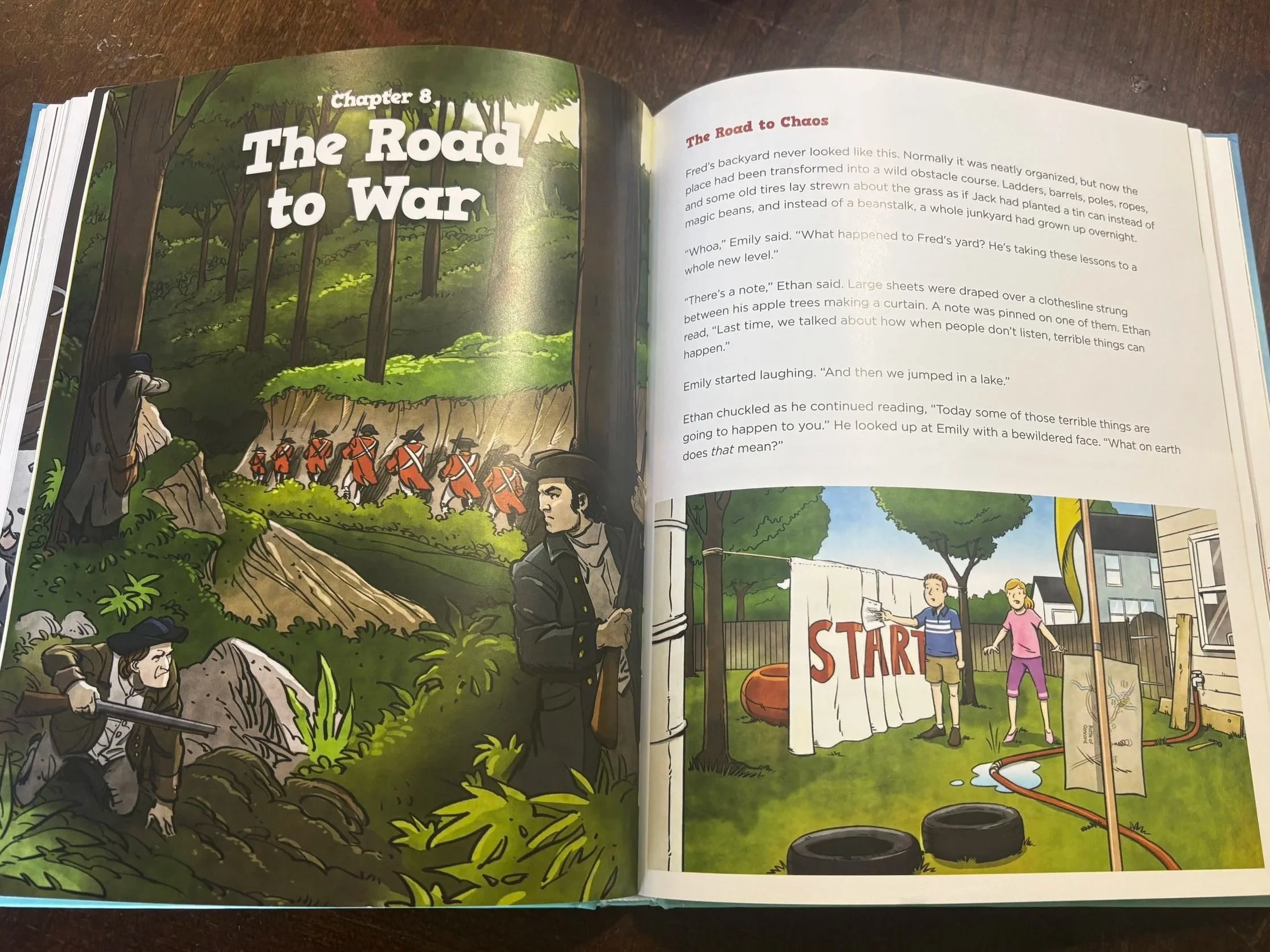
Both volumes include 11 chapters that are each divided into approximately 3 sections, but the number of pages in each section varies. The chapters appear to be around 20-30 pages each.
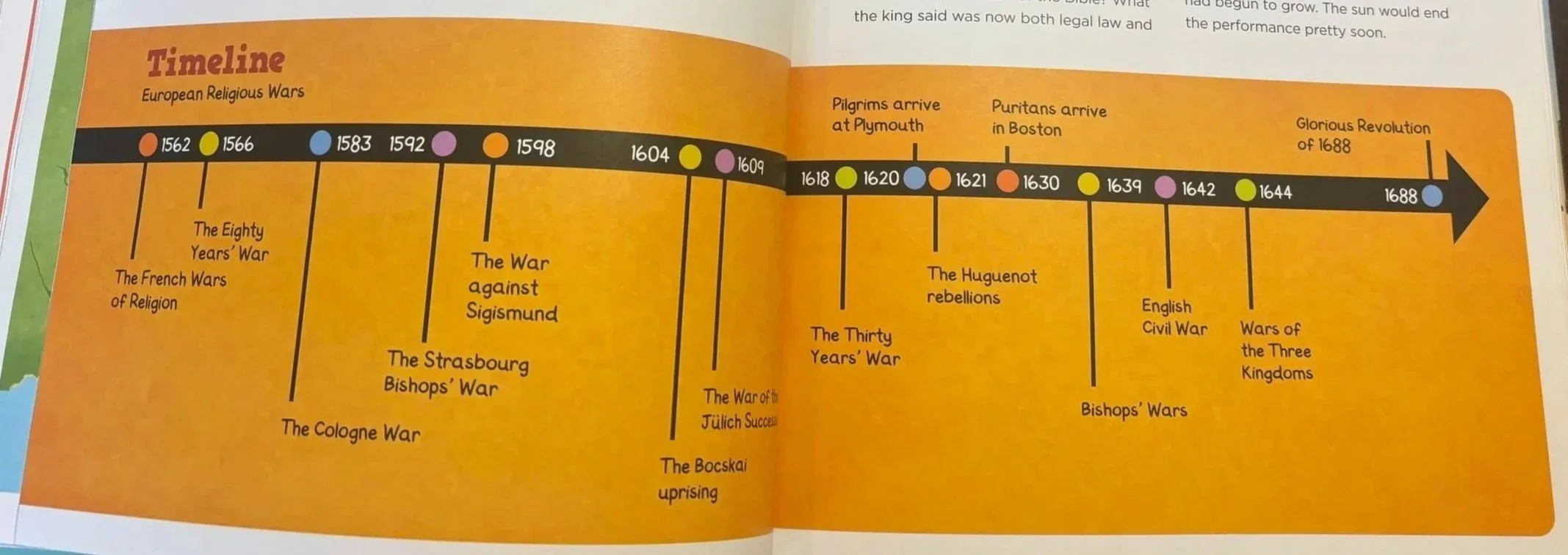
Vibrant drawings, bright boxes of further info, as well as maps and timelines fill the pages. Every two-page spread has at least one image or callout which adds to the visual appeal.
Peek Inside
If you go to this page and scroll past the “What Families are Saying” section (or just search “sample”) you’ll find a sample PDF for both Volume 1 and Volume 2.
Layout
Storybook Style
Each chapter is written like a picture book. For example, the first chapter of Volume One starts with:
“The clear, blue sky hung like a curtain from the trees on both sides of the pool. Parents read books or tapped on their phones…””
The story follows twins Emily and Ethan Tuttle through different adventures as they interact with their community. Along the way they learn about and discuss America’s history - the good, the bad, and the ugly. And rather than drilling dates and dull facts, the focus is always on the why behind each historical event.

The chapters have callout sections with lots of additional information sprinkled throughout to provide further historical details. However, the book could be read straight through from beginning to end while skipping these sections. Even omitting these, the storyline itself provides a wealth of historical information, which would especially be sufficient for younger elementary kids.
If you like to study history with multiple ages in your home (as a “family subject”), you could read aloud the story for each chapter to everyone and then read the additional info sections with just the older kids. The company has additional PDF activities that you can incorporate as well if you want to “beef up” the experience for some of your children. (See Other Resources below for more info).
Most of the historical information is presented within the context of the twins’ story. Often this occurs through dialogue with adults in their lives.
For example:
“No doubt it was,’ Fred said, folding up his chair and stowing it in a canvas bag. ‘The colonists couldn’t do much about the constant wars and changes of king and government. But they were mostly left alone for almost a hundred and fifty years. So they had to learn to govern themselves. The new King and Whig Parliament were happy to let that continue. No two colonies did it quite the same way - they had quite a lot of imagination! - but all the colonies set up councils, assemblies, or legislatures of some kind to make laws for the citizens of that area. Later, they also became heavily influenced by Locke’s writings, and they studied and thought about what the English Bill of Rights meant for them - after all, they believed themselves to be English citizens.”
Callouts and Images
Each chapter includes additional info offset in boxes or otherwise within their own sections. These are typically included on the page that addresses that particular topic, but certainly within the chapter that covers it.
More About…
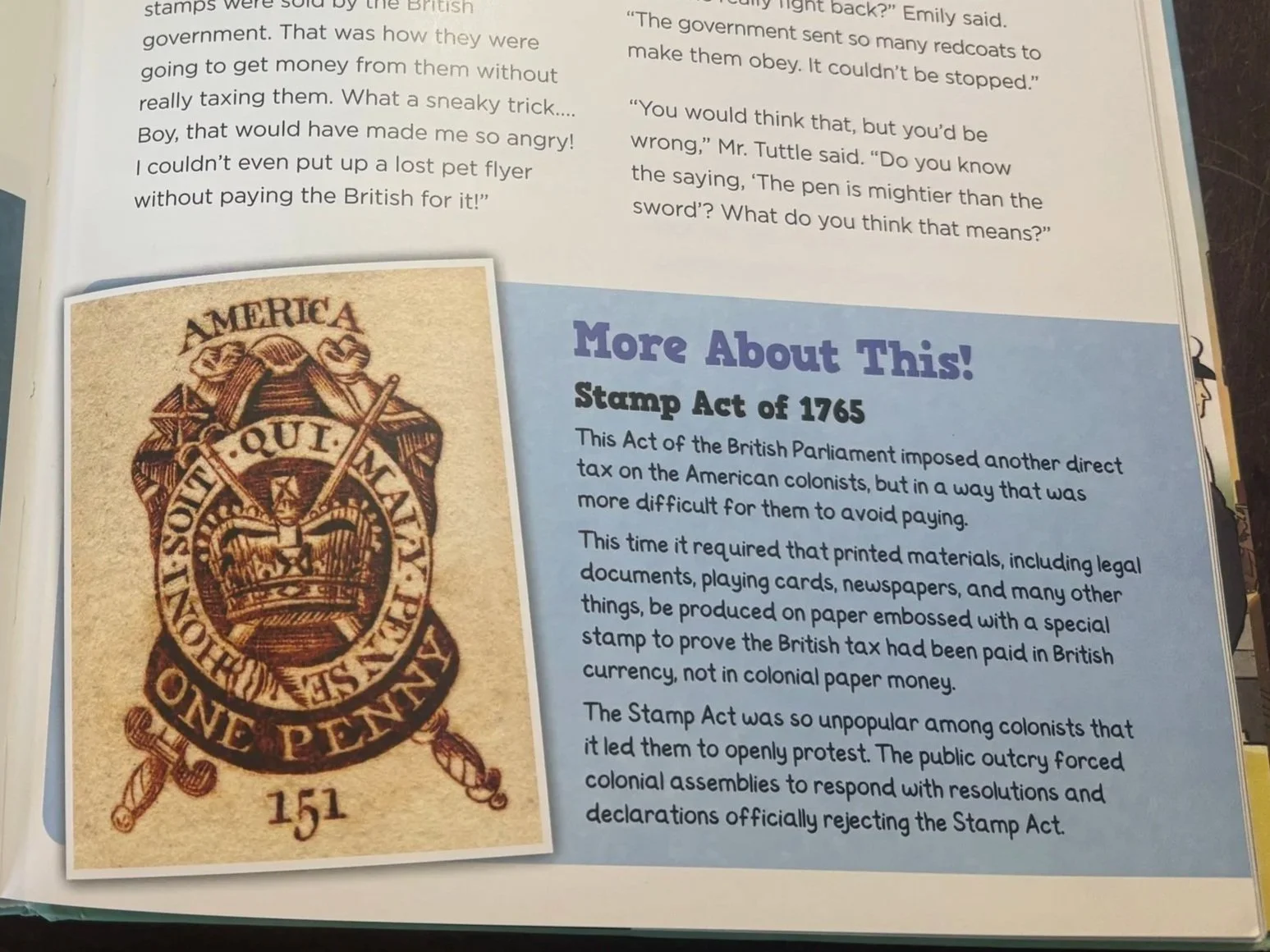
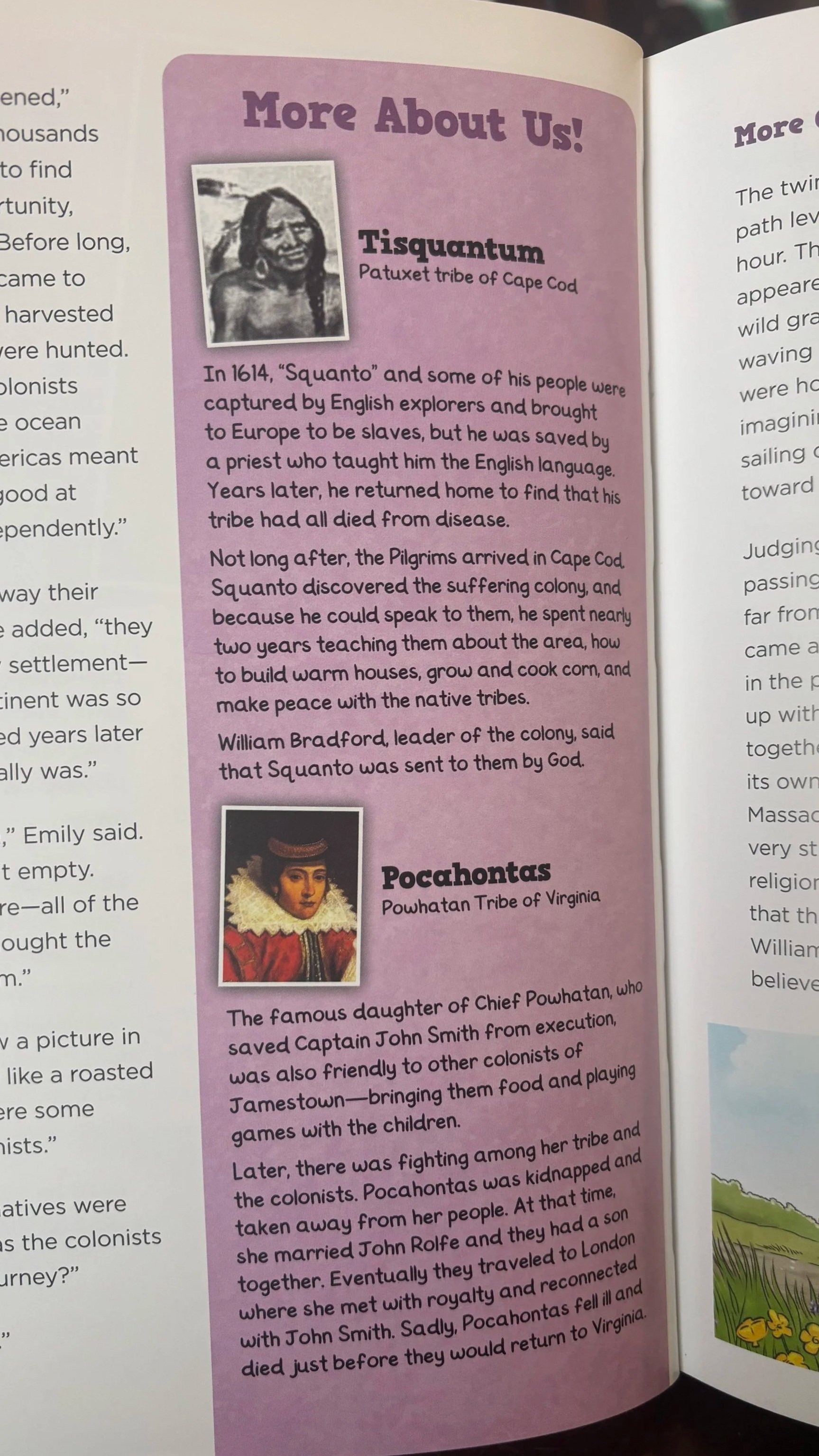
These callouts are titled More About Me/Us/This, depending on the topic.
They focus a little more attention on a particular person(s) or event.
These are included in separate sections to prevent interrupting the flow of the story. Even though these sections are not written in Tuttle Twins’ story format, they do provide interesting additional information to better understand the people and events being discussed.
I would find these especially useful if I were reading this with older elementary students and wanted them to dig a bit deeper into the people and events being discussed.
A Thought…to apply to your life
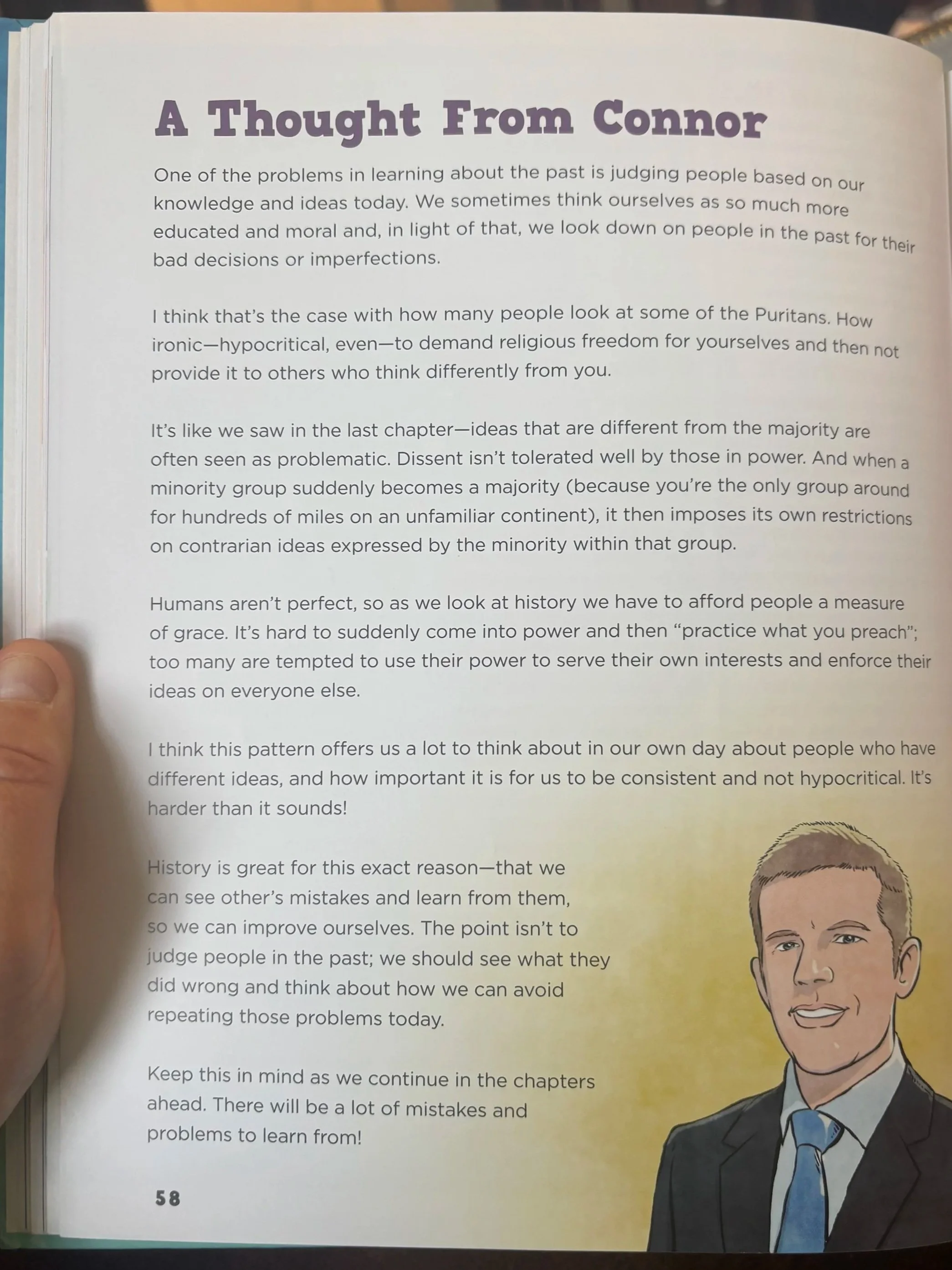
The “Thoughts” alternate from chapter to chapter between Connor and Elijah. They can be found on the last 1-2 pages of each chapter.
In this first sample, Connor encourages the reader to remember that history is the story of humans. And since they are imperfect people, like us, we have to recognize their flaws along with the things they got right.
And thankfully, we get to learn from their decisions - the good and the bad!
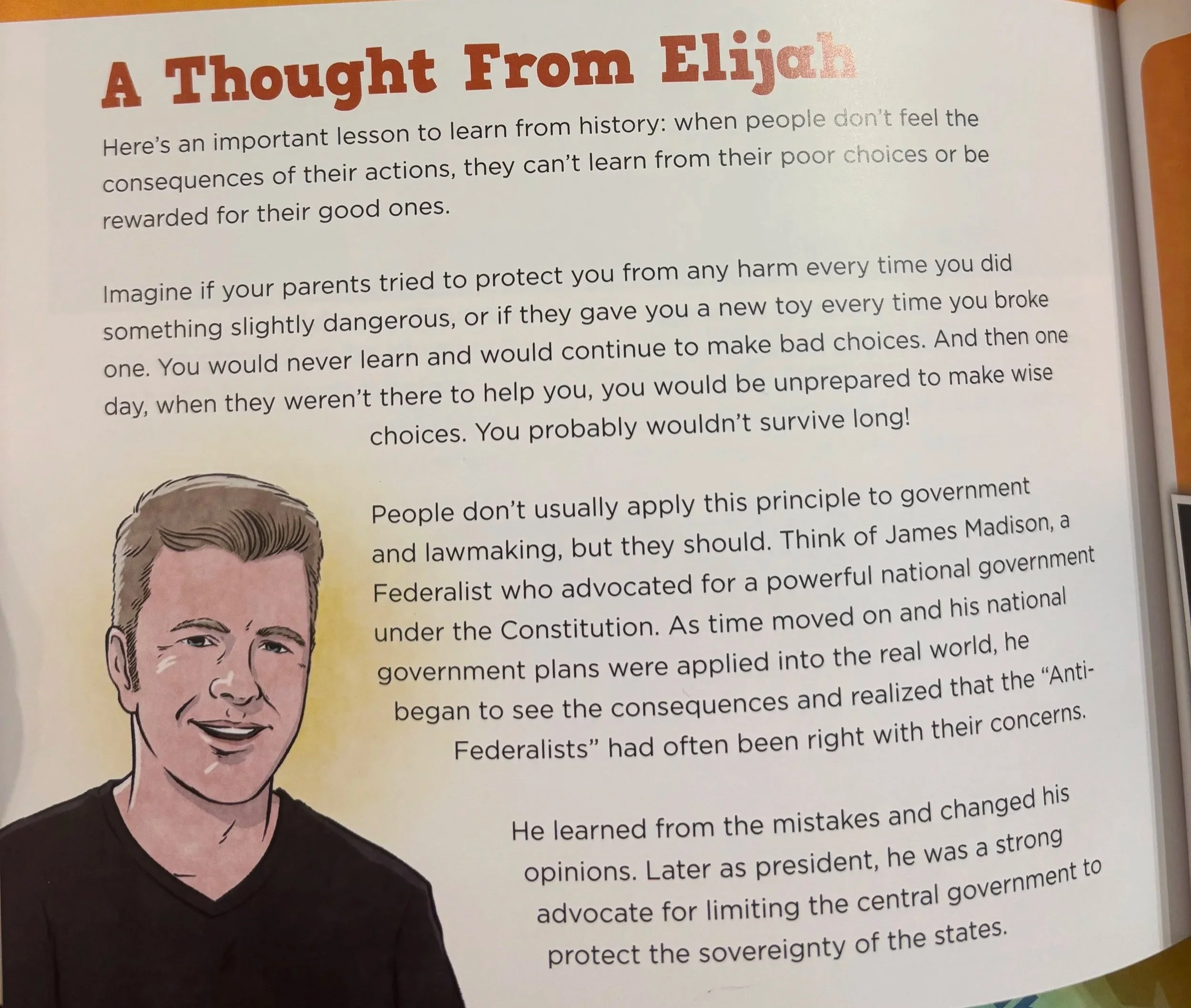
I really appreciate the way they tie the concepts from history into real life, which is the best way to help anyone remember and apply their learning. This second sample from volume 2 is by Elijah. I love knowing that my kids can learn about history and be guided in valuable ways to connect it to real life. Here’s an excerpt from this section:
“Imagine if your parents tried to protect you from any harm every time you did something slightly dangerous, or they gave you a new toy every time you broke one. You would never learn and would continue to make bad choices. And then one day, when they weren’t there to help you, you would be unprepared to make wise choices. You probably wouldn’t survive long!
People don’t usually apply this principle to government and lawmaking, but they should. Think of James Madison...”
Let’s Talk About It!
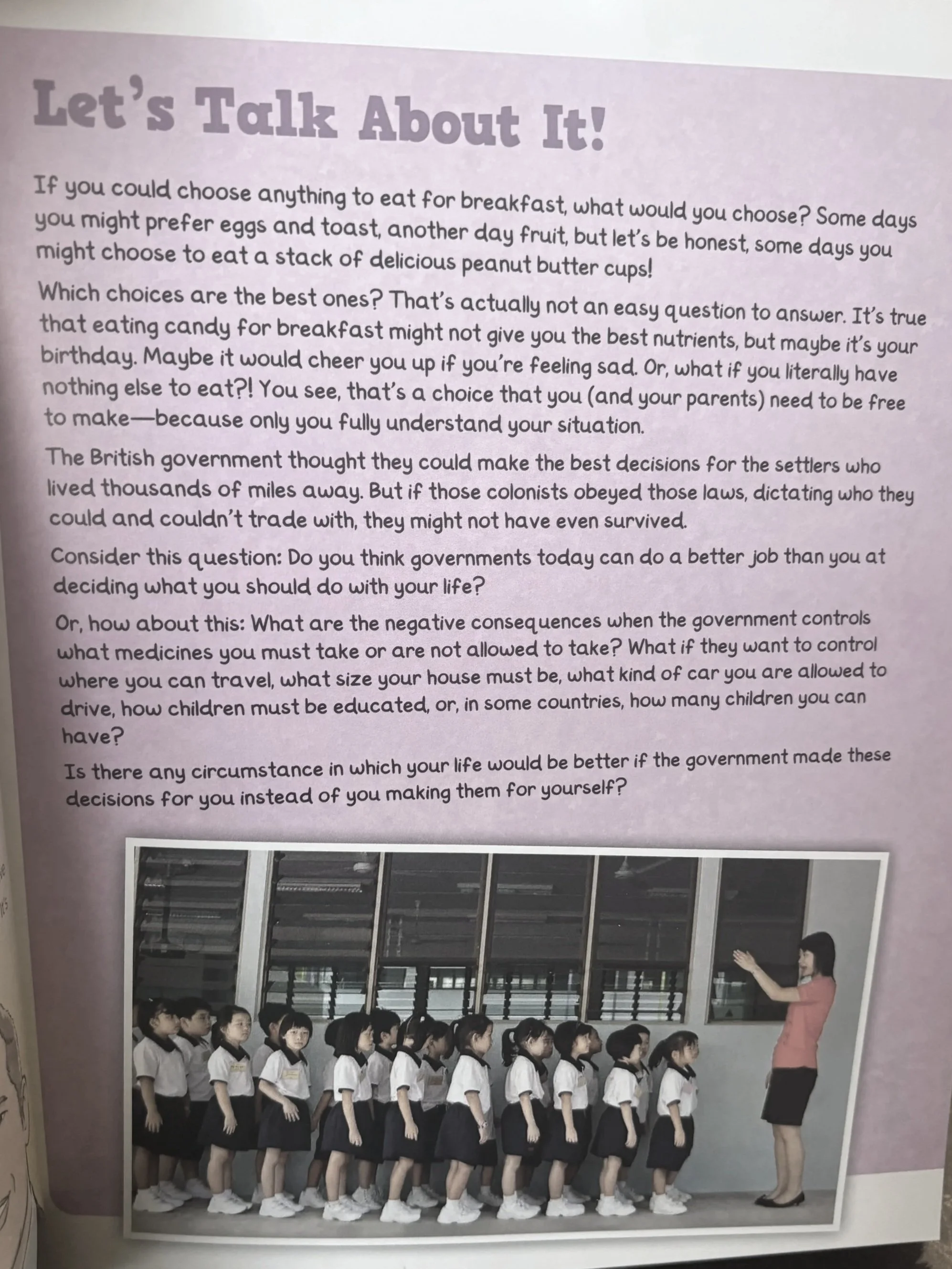
This section combines historical ideas with modern examples. In this they also ask questions for the kids to think about.
I like how this section takes a big idea from a long time ago, brings it home to today and then focuses in even more to the individual reading.
This is a great way to start a discussion with older kids. And if you needed some written assignments you could always have them answer in a notebook.
Maps and Timelines
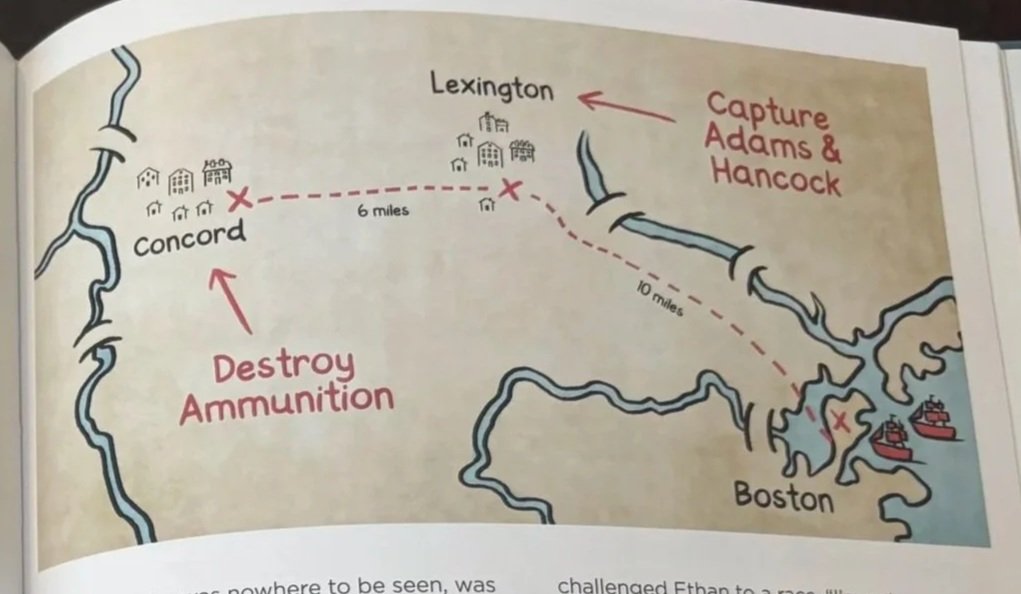
Maps and timelines are sprinkled throughout the books here and there, but they are not as plentiful as the other sections mentioned above. I do appreciate that they include some and yet keep the focus on the IDEAS and STORIES behind our country’s founding. Dates are useless if we aren’t learning from history.
Other Resources
The Companion Curriculum for each of these volumes contains about 200 pages of content, 6 hours of audiobook (you can listen to the texts being read), and 4 hours of video teachings. These are supplemental.
Lessons, Activities and Worksheets
The PDF pages provided for each volume have a variety of suggested activities to choose from. I would use these as an à la carte style learning rather than trying to use all of the activities.
Here are some examples:
Ongoing projects - maps and journals
Game suggestions
Creative Writing activities
Service Projects
Vocabulary Suggestions
Coloring Pages
Further Research
Depending on the age(s) of your children and the amount of time you want to spend on each of these chapters, you could implement one or more of the activities. Seriously, pick and choose! Don’t be a slave to the curriculum and try to do it all.
Audio Version
There is also an audio version of the book that is available to purchase (and often included in a bundle during sales). If you (like me!) prefer to let your kids listen to history stories in the car rather than wearing our your voice, these will be your friend.
Videos with Mr. C
For each volume there are around 8 videos, each approx. 25-30 minutes long.
Mr. C. is very animated, and although I haven’t watched the videos (other than briefly checking it out) he seems like he would keep the kids’ attention.
In these videos he tells stories, with some overlapping with the book. Following is a list of the video titles included.
List of the Videos:
How is Trade Connected with America’s History?
What Was the Age of Discovery?
What Was Happening in the Colonies?
Why Did British Redcoats Kill Some Colonists?
How Did Taxes and Smuggling Lead to Revolution?
What Was the Shot Heard ‘Round the World?
What Was the Militia That Shot the British?
Why Was Independence Declared?
Resources for Teens
Teen Program (ages 12-18)
They also have a course available for middle and high schoolers that I will probably purchase for my kids in a few years when we get there. You can see a sample from the course here. They call it The Academy.
They “offer a 30-day money-back guarantee, no questions asked.”
This course serves as a “social studies/civics/economics curriculum component for homeschoolers. Lessons are self-paced, include discussion questions and activities, and cover topics many homeschool curricula skip.”